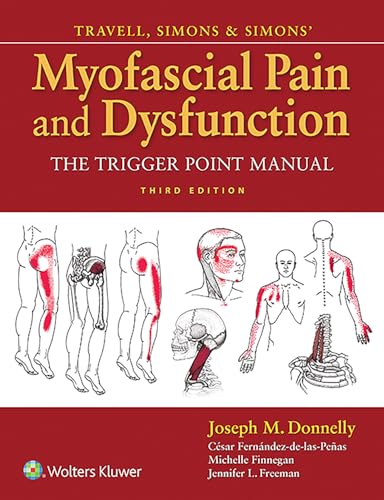
The Travell and Simons Trigger Point Book is a key resource on muscle pain and trigger points. It explains how muscle knots cause pain and how to treat them effectively.
This manual guides readers through understanding myofascial pain and dysfunction. It covers the upper and lower body with detailed illustrations and descriptions. The book helps identify trigger points and their pain patterns. Health professionals and patients use it for better pain relief.
It also includes practical charts and flipbooks for quick reference. Clear language and visuals make complex ideas easy to grasp. This book supports those dealing with chronic muscle pain or seeking to learn more about trigger point therapy. It remains a trusted reference in physical therapy and pain management fields.
Travell, Simons & Simons’ Myofascial Pain And Dysfunction: The Trigger Point Manual

The LWW – Travell, Simons & Simons’ Myofascial Pain and Dysfunction: The Trigger Point Manual is ideal for healthcare professionals, physical therapists, massage therapists, and students specializing in musculoskeletal pain and rehabilitation. Anyone seeking an in-depth understanding of myofascial pain and effective treatment techniques will benefit greatly from this comprehensive manual.
Pros:
- Extensive content with 968 pages covering detailed trigger point anatomy and treatment methods.
- Published by reputable brand and manufacturer LWW, ensuring high-quality and reliable information.
- Third edition offers updated and refined clinical insights for modern therapy approaches.
- Large format dimensions (11 x 8.75 inches) provide clear illustrations and easy readability.
- Comprehensive resource for both beginners and experienced practitioners in the field of myofascial pain.
Cons:
- Relatively heavy at approximately 2.3 pounds, which may be less portable for frequent travel.
- High level of detail might be overwhelming for casual readers or those new to the subject.
- Published in 2018, some newer research developments may not be included.
This manual stands out due to its exhaustive coverage of trigger points and the physiological basis of myofascial pain. The clear, detailed illustrations assist users in accurately identifying pain sources, enhancing treatment effectiveness. The structured layout facilitates easy navigation through complex topics, making it an essential reference for clinical practice.
Users benefit from practical treatment protocols and evidence-based therapeutic techniques outlined throughout the book. This empowers practitioners to improve patient outcomes by applying scientifically validated methods. Overall, this manual offers a valuable blend of theory and application that supports professional growth and improved patient care in the field of musculoskeletal health.
Myofascial Pain And Dysfunction: The Trigger Point Manual, Vol. 1

The Myofascial Pain and Dysfunction: The Trigger Point Manual, Vol. 1 – Upper Half of Body is ideal for healthcare professionals, physical therapists, massage therapists, and students specializing in musculoskeletal pain management. Those seeking an in-depth, authoritative resource on diagnosing and treating myofascial trigger points in the upper body will find this manual invaluable for improving patient outcomes.
Pros:
- Comprehensive coverage of trigger point anatomy and treatment techniques.
- Detailed illustrations and clear descriptions enhance understanding.
- Extensive content with 1056 pages provides an exhaustive reference.
- Published by reputable brands Lippincott Williams Wilkins and Williams & Wilkins.
- Second edition ensures updated and refined information.
Cons:
- Relatively heavy and bulky with a weight of over 4.4 pounds, making it less portable.
- Publication date from 1999 may mean some newer techniques are not covered.
- Large volume may be overwhelming for beginners seeking a quick reference.
This manual stands out due to its exhaustive explanation of myofascial trigger points affecting the upper half of the body. Its precise anatomical illustrations combined with therapeutic approaches allow practitioners to accurately identify and treat pain sources, improving patient relief and rehabilitation. The book’s detailed content supports both clinical practice and academic study, making it a cornerstone text in musculoskeletal therapy.
The physical dimensions of the book (10.5 inches high, 7.75 inches long, and 2 inches wide) reflect its comprehensive nature, while the weight emphasizes its role as a detailed reference rather than a portable guide. Overall, the manual’s authoritative content and clarity make it a valuable tool for anyone dedicated to mastering myofascial pain treatment techniques in the upper body region.
Myofascial Pain And Dysfunction: The Trigger Point Manual; Vol. 2., The Lower Extremities
![Myofascial Pain and Dysfunction: The Trigger Point Manual; Vol. 2., The Lower Extremities [Hardcover] [Oct 09, 1992] Janet G. Travell and David G. Simons](https://m.media-amazon.com/images/I/51B9Sf9c1hL._SL500_.jpg)
The Myofascial Pain and Dysfunction: The Trigger Point Manual; Vol. 2., The Lower Extremities is ideal for healthcare professionals, including physical therapists, chiropractors, massage therapists, and physicians who specialize in pain management and musculoskeletal disorders. It is also valuable for students and researchers seeking an in-depth understanding of trigger point therapy and myofascial pain in the lower extremities.
Pros:
- Comprehensive coverage of lower extremity trigger points and related dysfunctions.
- Written by renowned experts Janet G. Travell and David G. Simons, pioneers in the field.
- Extensive detail with 607 pages in a well-organized first edition hardcover format.
- Provides clear anatomical illustrations and clinical insights for practical application.
- Published by reputable Lippincott Williams Wilkins and Williams & Wilkins, ensuring quality content.
Cons:
- The book’s weight of nearly 3 pounds and size may limit portability.
- Some content may be technical and dense for beginners without a medical background.
- Publication date of 1992 means it may not include the latest research developments.
This manual provides an in-depth exploration of trigger points specifically in the lower extremities, highlighting the complex interplay between muscles, fascia, and nerve pathways. The detailed anatomical descriptions and clinical case studies allow practitioners to accurately diagnose and effectively treat myofascial pain syndromes. Users benefit from a clear understanding of pain referral patterns and therapeutic techniques that can improve patient outcomes.
The hardcover edition’s durable format and comprehensive content make it an essential reference for clinical use. With its extensive page count and rich illustrations, the manual supports both learning and practical application in real-world settings. While it requires some prior knowledge to fully grasp, the book’s authoritative approach provides valuable insights that enhance professional expertise in pain management and musculoskeletal therapy.
Myofascial Pain And Dysfunction, Vol. 1: The Trigger Point Manual

The Myofascial Pain and Dysfunction, Vol. 1: The Trigger Point Manual, The Upper Extremities is ideal for healthcare professionals such as physical therapists, massage therapists, chiropractors, and physicians who specialize in musculoskeletal disorders. It is also suitable for students and practitioners who want an in-depth understanding of trigger points and their role in myofascial pain. Anyone looking to enhance their diagnostic and treatment skills for upper extremity pain and dysfunction will benefit greatly from this comprehensive manual.
Pros:
- Extensive coverage with 713 pages of detailed content on trigger points.
- Published by the reputable Lippincott Williams and Wilkins, ensuring high-quality and authoritative information.
- Includes clear illustrations and practical guidelines for identifying and treating myofascial pain in the upper extremities.
- First Edition classic that serves as a foundational resource in the field.
- Comprehensive approach combining anatomy, pathology, and clinical application.
Cons:
- Relatively large and heavy book, weighing over 3 pounds, which might be cumbersome to carry.
- Publication date of 1983 may mean some newer techniques or research are not included.
- Highly detailed content may be overwhelming for beginners without prior knowledge.
This manual is structured to provide a thorough understanding of the anatomy and physiology related to trigger points in the upper extremities. It offers detailed descriptions and illustrations that help practitioners accurately locate and treat areas of myofascial pain. The emphasis on clinical application makes it a practical tool in daily therapeutic settings, enabling improved patient outcomes through effective pain management.
The benefits of using this manual include enhanced diagnostic accuracy and a better grasp of pain referral patterns associated with trigger points. The extensive coverage allows practitioners to tailor treatment plans specific to patient needs, thereby reducing discomfort and improving mobility. Despite its age, the manual remains a cornerstone resource due to its depth, clarity, and clinical relevance in the field of musculoskeletal therapy.
Trigger Point Pain Patterns Flip Charts

The Travell, Simons & Simons’ Trigger Point Pain Patterns Flip Charts are ideal for healthcare professionals such as physical therapists, massage therapists, chiropractors, and medical students who require a detailed and visual reference for diagnosing and treating muscle pain. This resource is perfect for those looking to enhance their understanding of trigger points and pain referral patterns to improve patient outcomes.
Pros:
- Compact and lightweight design measuring 14.96 inches by 11.81 inches, making it easy to carry and use in clinical settings.
- Contains 24 detailed pages with clear illustrations of trigger point pain patterns for effective learning.
- Published by ACC in 2022, ensuring up-to-date and reliable information.
- Second edition features refined content and improved visuals for better comprehension.
- Durable flip chart format allows quick reference during patient consultations.
Cons:
- The flip chart format might not be as comprehensive as a full textbook for deep study.
- Limited number of pages (24) may restrict the scope of covered muscles and pain patterns.
- Physical size might be bulky for some users who prefer digital or more compact resources.
The Travell, Simons & Simons’ Trigger Point Pain Patterns Flip Charts offer a practical and visual approach to understanding muscular pain patterns. The detailed illustrations on each page provide clear guidance on identifying trigger points and their associated referral pain areas, which is essential for accurate diagnosis and effective treatment planning. Users benefit from the concise yet comprehensive layout, allowing them to quickly find relevant information during clinical practice.
Additionally, the flip chart’s durable construction and manageable weight of just under half a pound make it a convenient tool for professionals on the go. The second edition reflects the latest research and clinical insights, ensuring users have access to current and reliable data. Overall, this resource enhances the ability of healthcare providers to deliver targeted therapy, improving patient comfort and recovery times.
Travell And Simons’ Trigger Point Flip Charts

The Travell and Simons’ Trigger Point Flip Charts are ideal for healthcare professionals, physical therapists, massage therapists, and students in the field of musculoskeletal therapy who require a quick and reliable reference to identify and treat trigger points. This resource is perfect for those who want to enhance their understanding of muscle pain patterns and improve patient outcomes through effective manual therapy techniques.
Pros:
- Compact and portable format for easy use during clinical sessions.
- Clear illustrations and concise descriptions of trigger points and referred pain patterns.
- Produced by Wolters Kluwer Health, ensuring credible and authoritative content.
- Durable, laminated pages for long-lasting use.
- Facilitates quick learning and reference with only 24 pages.
Cons:
- Limited to the first edition, published in 2014, so may not include the latest research updates.
- Smaller page count may restrict the depth of information for advanced users.
- Primarily focused on trigger points, not covering broader musculoskeletal conditions.
The Travell and Simons’ Trigger Point Flip Charts provide a practical and efficient way to quickly identify trigger points and understand their referred pain patterns. The flip chart format allows clinicians to flip between muscles and pain charts seamlessly, enhancing clinical decision-making in real-time. Its compact design means it can be easily carried around or stored for quick access during patient consultations.
Each page features clear, detailed illustrations paired with succinct explanations, allowing users to gain a comprehensive yet straightforward understanding of trigger point anatomy and treatment. This makes it an invaluable tool for both learning and practice, helping users to accurately locate and treat myofascial pain, ultimately improving patient care and therapeutic outcomes.
Travell, Simons & Simons’ Trigger Point Pain Patterns Wall Charts Package

The Travell, Simons & Simons’ Trigger Point Pain Patterns Wall Charts Package is ideal for healthcare professionals such as physical therapists, chiropractors, massage therapists, and medical students who need a comprehensive visual aid to understand and diagnose trigger point pain patterns effectively. This package is perfect for those seeking to enhance patient education and improve treatment outcomes through detailed anatomical references.
Pros:
- Includes detailed and clear trigger point pain patterns for accurate diagnosis.
- Compact and lightweight design with dimensions of 3.23 x 22.44 x 3.15 inches and weight of 0.74 pounds, making it easy to display in any clinical setting.
- Produced by reputable manufacturer ACC, ensuring high-quality and reliable content.
- Updated second edition published in 2021, reflecting the latest research and clinical insights.
- Helps improve patient communication by providing clear visual explanations of pain sources.
Cons:
- May require some prior knowledge to fully interpret the detailed anatomical information.
- Physical wall charts may not be as portable as digital alternatives for on-the-go professionals.
- Limited to trigger point pain patterns and may need to be supplemented with other anatomical resources for broader use.
The Travell, Simons & Simons’ Trigger Point Pain Patterns Wall Charts Package features highly detailed illustrations that map out common trigger points and their associated pain referral patterns. These charts serve as an essential tool for professionals seeking to identify the precise origin of muscular pain and develop targeted treatment plans. By visually representing pain patterns, the charts simplify complex anatomical information, making it accessible for both practitioners and patients.
Additionally, the package’s compact size and lightweight design make it convenient to mount in treatment rooms or classrooms without occupying much space. The second edition, published in 2021, incorporates the latest clinical findings, ensuring users have access to up-to-date and evidence-based information. This enhances diagnostic accuracy and helps practitioners stay current with evolving pain management techniques.
Travell, Simons & Simons’ Trigger Point Pain Patterns Wall Chart

The Travell, Simons & Simons’ Trigger Point Pain Patterns Wall Chart: Trunk, Pelvis, and Lower Limb is ideal for medical professionals, physical therapists, and students specializing in musculoskeletal pain management. This chart is perfect for anyone who needs a clear, visual reference to understand and identify trigger point pain patterns in the trunk, pelvis, and lower limb regions. It is also valuable for fitness trainers and massage therapists looking to deepen their knowledge of pain referral patterns.
Pros:
- Highly detailed and accurate depiction of trigger point pain patterns.
- Compact and durable with dimensions of 19.5 x 20.25 inches and lightweight design.
- Manufactured by ACC, ensuring professional quality and reliability.
- Single-page format allows for easy wall mounting and quick reference.
- Second edition reflects updated and refined information for current clinical use.
Cons:
- Limited to only the trunk, pelvis, and lower limb regions, excluding upper body trigger points.
- One-page layout may restrict detailed information compared to multi-page resources.
- Print size and fine details might be difficult to read from a distance in larger rooms.
This wall chart offers a concise yet comprehensive visual tool that highlights the complex relationships between trigger points and their associated pain patterns. Its clear illustrations make it easier for users to quickly identify the source of pain, aiding in more accurate diagnosis and treatment planning. The chart’s portability and durable construction allow it to be conveniently displayed in clinics, therapy rooms, or classrooms.
By using the Travell, Simons & Simons’ Trigger Point Pain Patterns Wall Chart, practitioners benefit from a quick-reference guide that supports patient education and improves communication about pain origins. The updated second edition ensures that users have access to the latest clinical insights, enhancing the overall effectiveness of pain management strategies. This chart is an essential resource for anyone serious about understanding and treating musculoskeletal pain.
The Trigger Point Therapy Workbook

The Trigger Point Therapy Workbook is ideal for individuals seeking effective, self-guided methods to relieve muscle pain and tension. Whether you suffer from chronic discomfort, sports injuries, or everyday muscle tightness, this workbook offers practical techniques for anyone committed to improving their physical well-being through targeted self-treatment. It is especially valuable for those who prefer a hands-on approach to pain management without immediately resorting to medications or professional interventions.
Pros:
- Comprehensive step-by-step instructions for identifying and treating trigger points
- Includes detailed illustrations for easy understanding and application
- Written by reputable experts from New Harbinger Publications
- Third edition with updated content reflecting the latest research in pain relief
- Portable size with 376 pages of valuable information
Cons:
- Some techniques may require patience and practice to master
- Not a substitute for professional medical diagnosis or treatment
- Primarily text and illustration-based, which may not suit all learning styles
This workbook offers a detailed exploration of trigger point therapy techniques that help users locate and release muscle knots responsible for pain and discomfort. By providing clear explanations and practical exercises, it empowers readers to take control of their pain management. The inclusion of precise illustrations enhances comprehension, allowing users to accurately apply pressure to affected areas for maximum benefit.
Additionally, the third edition reflects updated therapeutic approaches and research, ensuring readers have access to the most current and effective methods. The book’s manageable dimensions make it easy to carry and reference anytime, supporting consistent practice. Overall, this self-help guide is a valuable resource for anyone looking to improve mobility, reduce muscle pain, and enhance their quality of life through accessible and natural techniques.
Trigger Point Pain Patterns Wall Chart

The Travell, Simons & Simons’ Trigger Point Pain Patterns Wall Chart: Head, Neck, and Upper Limb is ideal for healthcare professionals such as physical therapists, chiropractors, and massage therapists who need a detailed, visual reference to better understand and treat trigger points. It is also beneficial for students and practitioners specializing in pain management and musculoskeletal therapy looking to enhance their diagnostic accuracy.
Pros:
- Comprehensive visual guide that clearly illustrates pain patterns for the head, neck, and upper limb regions.
- Compact and lightweight design with dimensions of 20.0 inches height and weighing only 0.2 pounds, making it easy to display and transport.
- Second edition published in 2021, ensuring up-to-date and accurate information.
- Single-page format allows for quick reference without flipping through multiple pages.
- Manufactured by ACC, a trusted name in educational resources.
Cons:
- Limited to only the head, neck, and upper limb regions, so not suitable for full-body trigger point mapping.
- May require prior knowledge or training to fully interpret the pain patterns effectively.
- As a wall chart, it may not be as portable as digital resources for some users.
This wall chart offers a detailed and precise depiction of trigger point pain patterns specifically focused on the head, neck, and upper limb. Its clear illustrations help practitioners quickly identify and correlate pain symptoms with underlying muscular issues, improving diagnostic efficiency. The compact size makes it an excellent addition to clinical settings, where space is often limited but accessibility to critical information remains essential.
By utilizing this chart, healthcare professionals can enhance their treatment plans by visually pinpointing trigger points, facilitating targeted therapy that can lead to faster patient recovery and reduced discomfort. The updated second edition ensures users have access to the most current research-backed data, making it a reliable tool for clinical decision-making and educational purposes.
Frequently Asked Questions
What Is Travell And Simons Trigger Point Book About?
The book explains myofascial pain caused by trigger points. It offers detailed muscle maps and treatment techniques. It helps healthcare professionals diagnose and treat chronic pain effectively.
Who Are The Authors Of Travell And Simons Trigger Point Manual?
Janet G. Travell and David G. Simons co-authored the manual. They are pioneers in myofascial pain research. Their expertise makes the book a trusted resource for pain management.
How Many Volumes Are In The Trigger Point Manual Series?
The series has two main volumes. Volume 1 covers the upper half of the body. Volume 2 focuses on the lower extremities. Both volumes provide comprehensive muscle and pain pattern details.
What Are Trigger Point Pain Patterns Wall Charts Used For?
These charts visually display common pain referral patterns. They aid clinicians in identifying trigger points quickly. The charts enhance understanding of muscle pain distribution for better treatment.
Can Beginners Use The Trigger Point Therapy Workbook?
Yes, it is designed for self-treatment and beginners. The workbook offers step-by-step pain relief techniques. It complements the medical manuals with easy-to-follow instructions for personal use.
How Does The Trigger Point Manual Help With Chronic Pain?
It identifies specific muscle trigger points causing pain. The manual guides precise pressure and release therapy methods. This targeted approach reduces pain and improves mobility effectively.
Conclusion
The Travell and Simons Trigger Point book series offers clear, detailed information about muscle pain and treatment. It helps readers understand how trigger points cause pain in different body areas. The charts and manuals are useful tools for students, therapists, and anyone interested in pain relief.
These resources explain pain patterns and treatment methods in simple steps. They also show how to find and treat trigger points effectively. Using these books can improve knowledge about myofascial pain and support better care. Whether you are new to this topic or have some experience, these manuals provide valuable guidance.
They break down complex ideas into easy parts anyone can follow. Overall, the Travell and Simons Trigger Point books remain a trusted source for learning about muscle pain and therapy. They help make pain easier to understand and manage. A great addition for anyone wanting to learn about trigger point therapy.
