Infectious diseases pose unique risks during travel. Travel medicine helps prevent and manage these health issues.
Travel medicine focuses on protecting travelers from infections common in different regions. It includes vaccines, medications, and health advice before and during trips. Understanding infectious diseases helps travelers stay safe and avoid serious illness. Medical guides like *Mandell, Douglas, and Bennett’s Principles and Practice of Infectious Diseases* offer detailed information for healthcare providers.
Resources such as *Travel Medicine: Expert Consult* provide practical advice for travelers and doctors alike. Short courses and specialized texts also cover the basics and advanced topics of infectious diseases and pharmacology. Staying informed about travel health reduces risks and ensures a safer journey for everyone.
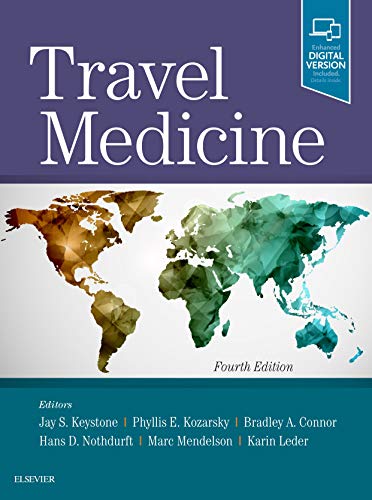
Travel Medicine

The Travel Medicine: Expert Consult – Online and Print is ideal for healthcare professionals, travel medicine specialists, and frequent travelers seeking comprehensive, up-to-date medical guidance for international travel. This resource is perfect for those who require reliable information on disease prevention, treatment protocols, and health risks associated with global travel.
Pros:
- Comprehensive coverage of travel-related medical issues and diseases.
- Includes both online access and print edition for convenience.
- Published by the reputable Elsevier brand and manufacturer.
- Extensive 578 pages offering detailed insights and expert advice.
- Up-to-date 4th edition with current guidelines as of 2018.
- Compact dimensions and lightweight design make it portable and easy to handle.
Cons:
- Publication date from 2018 may lack the very latest travel medicine updates.
- Primarily targeted at professionals, which might be complex for casual travelers.
- Print edition may be bulky for some users despite its manageable size.
This edition of Travel Medicine: Expert Consult combines detailed medical knowledge with practical usability. The book’s extensive content covers everything from vaccination protocols to managing tropical diseases, making it an indispensable tool for medical practitioners advising travelers. The inclusion of online access enhances user experience by allowing quick updates and supplementary information.
The thoughtfully designed layout and expert contributions ensure users can confidently navigate complex travel health scenarios. With its balance of thorough scientific detail and accessible presentation, the resource supports informed decision-making and improved patient outcomes, whether used in clinical settings or for personal travel preparation.
Mandell, Douglas, And Bennett’s Principles And Practice Of Infectious Diseases

Ideal for medical professionals, infectious disease specialists, and students seeking an authoritative and comprehensive resource, the Mandell, Douglas, and Bennett’s Principles and Practice of Infectious Diseases: 2-Volume Set serves as an essential guide for understanding complex infectious conditions and treatment protocols.
Pros:
- Extensive coverage with over 4,176 pages of detailed information.
- Published by the reputable Elsevier brand, ensuring high-quality content.
- Comes in a convenient 2-volume set for thorough study and reference.
- 9th edition includes the latest advances and research up to 2019.
- Well-organized and structured for easy navigation through complex topics.
Cons:
- Large size and weight (0.62 pounds and bulky dimensions) may make it less portable.
- High level of detail might be overwhelming for casual readers or beginners.
- Publication date of 2019 means some very recent developments may not be included.
The Mandell, Douglas, and Bennett’s Principles and Practice of Infectious Diseases stands out as a comprehensive reference, meticulously covering a vast array of infectious diseases. Its dual-volume format allows for in-depth exploration of disease mechanisms, diagnostics, and treatment options. The detailed content is backed by thorough research, making it invaluable for practitioners who require precision and current clinical guidelines.
Designed with the professional user in mind, this set balances complex scientific detail with practical applications. The book’s extensive page count and structured layout facilitate efficient access to information during clinical decision-making or academic study. Its publication by Elsevier adds to its credibility, offering users confidence in the accuracy and reliability of the material presented.
Infectious Diseases: A Clinical Short Course

The Infectious Diseases: A Clinical Short Course, 4th Edition is ideal for medical students, healthcare professionals, and clinicians who need a concise yet comprehensive guide to infectious diseases. If you seek a practical resource that simplifies complex concepts and supports clinical decision-making, this book is tailored for you.
Pros:
- Concise and well-organized content for quick reference
- Updated with the latest clinical guidelines and research as of 2020
- Compact size and lightweight design for portability
- Includes 496 pages covering a broad spectrum of infectious diseases
- Published by the reputable McGraw-Hill Education, ensuring high-quality material
Cons:
- May be too brief for users seeking in-depth, exhaustive coverage
- Print edition might lack interactive digital features
- Some clinical updates after 2020 are not included
The 4th Edition of this clinical short course is designed to deliver essential knowledge in an accessible format, measuring 9.2 inches in height and 7.4 inches in length, making it easy to carry around. Its 496 pages are packed with valuable information, carefully curated to focus on practical application rather than overwhelming theory. This structure allows users to quickly find relevant information during clinical practice or study sessions.
One of the key features is its emphasis on up-to-date clinical guidelines, which helps healthcare providers stay informed about the best practices in diagnosing and managing infectious diseases. The book’s concise chapters and clear illustrations enhance comprehension, making it an excellent tool for exam preparation and real-world application. Overall, this resource supports effective learning and informed patient care in the fast-paced medical environment.
Infectious Disease And Pharmacology: Neonatology Questions And Controversies

The Infectious Disease and Pharmacology: Neonatology Questions and Controversies is ideal for neonatologists, pediatric infectious disease specialists, and clinical pharmacists who focus on newborn care. This book is perfect for healthcare professionals seeking a comprehensive guide to the latest challenges and therapeutic approaches in managing infections and pharmacological treatments in neonates. It is also beneficial for medical students and residents specializing in neonatology who want to deepen their understanding of complex infectious and pharmacological issues in this vulnerable population.
Pros:
- Comprehensive coverage of infectious diseases specific to neonates
- Expert insights from leading clinicians and researchers
- Practical guidance on pharmacological management and controversies
- Updated information reflecting recent advances as of 2018
- Compact and manageable size with 308 pages for focused reading
Cons:
- Limited to the first edition; may lack the very latest research beyond 2018
- Specialized content may be too detailed for general practitioners
- Physical weight of 2.3 pounds might be cumbersome for frequent transport
This book features a detailed exploration of infectious diseases affecting neonates, emphasizing diagnosis, treatment, and prevention strategies. It delves into complex pharmacological questions and controversies, providing evidence-based recommendations that help clinicians navigate difficult therapeutic decisions. The inclusion of case studies and clinical scenarios enhances understanding and application in real-world settings.
Users benefit from its clear explanations of drug mechanisms, dosing considerations, and potential adverse effects tailored to neonatal physiology. The expert contributions ensure that readers receive authoritative perspectives on emerging challenges and innovative solutions. Overall, this resource supports improved patient outcomes by equipping healthcare providers with current and practical knowledge in the specialized field of neonatal infectious disease and pharmacology.
Frequently Asked Questions
What Is Travel Medicine And Why Is It Important?
Travel medicine focuses on preventing and managing health risks during travel. It helps travelers avoid infections and stay safe abroad. Vaccinations, medications, and health advice are essential parts of travel medicine. This field reduces disease spread and protects global health.
How Do Infectious Diseases Affect International Travelers?
Travelers risk exposure to diseases uncommon in their home countries. Infectious diseases can cause severe illness or outbreaks. Proper precautions, vaccines, and hygiene reduce these risks. Awareness of local health conditions is critical for safe travel.
What Are Common Vaccines Recommended For Travelers?
Common vaccines include hepatitis A and B, typhoid, yellow fever, and influenza. Recommendations vary based on destination and travel duration. Vaccines prevent serious infections and protect both travelers and local populations. Consulting a travel medicine expert is advised.
How Does Pharmacology Relate To Infectious Diseases In Neonates?
Pharmacology guides safe medication use in newborns with infections. Neonates need tailored drug dosages due to immature organs. Proper pharmacology prevents drug toxicity and ensures effective treatment. This knowledge is crucial in neonatal infectious disease care.
Why Consult Expert Resources For Infectious Disease Management?
Expert resources offer updated, evidence-based guidance on diagnosis and treatment. They help clinicians handle complex infections and emerging diseases. Using authoritative references improves patient outcomes and supports informed clinical decisions. Access to expert content is vital for best practices.
Conclusion
Travel and infectious diseases are closely linked. Knowing about risks helps travelers stay safe. Vaccines and medicines protect against many infections. Careful planning before trips can reduce health problems. Experts and trusted books provide useful advice for travelers. Learning about common diseases in certain places is important.
Simple steps like hand washing and avoiding risky food help too. Staying informed about travel medicine keeps journeys healthy. Being prepared means enjoying trips without illness worries. Always seek advice from health professionals before traveling. This knowledge supports safer and more enjoyable travel experiences.
