The right to travel is a fundamental freedom protected by the U.S. Constitution. The Supreme Court has ruled on many key cases shaping this right.
This blog explores important Supreme Court rulings on the right to travel. These cases explain how the courts balance individual freedom with government interests. Understanding these rulings helps clarify what the right to travel means today. The history of these decisions shows how the courts protect personal movement across states and within the country.
This topic connects to broader constitutional rights and affects everyday life. Knowing these rulings gives insight into American law and citizens’ freedoms. This introduction sets the stage for a deeper look at landmark cases that define the right to travel.
History: Landmark Supreme Court Cases

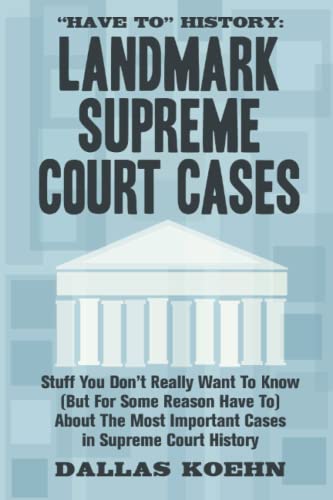
The book “Have To” History: Landmark Supreme Court Cases: Stuff You Don’t Really Want To Know (But For Some Reason Have To) About The Most Important Cases In Supreme Court History is ideal for readers who have a keen interest in legal history, political science students, or anyone looking to understand the pivotal Supreme Court cases that shaped the United States. It is especially suitable for those who want a concise yet informative overview without getting lost in overly complex legal jargon.
Pros:
- Provides clear and engaging explanations of complex Supreme Court cases.
- Compact and easy-to-carry dimensions make it convenient for study or reference.
- Published by an independent publisher, offering a unique perspective outside mainstream textbooks.
- Includes 226 pages of detailed content, making it comprehensive yet manageable.
- Appealing to readers who want to learn without feeling overwhelmed by legalese.
Cons:
- May not provide in-depth legal analysis for advanced law students or professionals.
- Color code ZJ9320 might not appeal to all aesthetic preferences.
- Limited to cases recognized up to its publication date of August 2020.
This book offers a well-structured approach to understanding some of the most significant Supreme Court decisions in American history. Its user-friendly format allows readers to grasp the essence of landmark rulings and their impact on society without feeling overwhelmed by technical details. The moderate size and weight of the book make it a practical choice for students or casual readers who want to carry it around or keep it handy for reference.
Moreover, the independently published nature of the book gives it a fresh and approachable tone, different from traditional academic texts. Readers benefit from a straightforward narrative that highlights the importance of these cases and how they continue to influence current legal and social landscapes. Overall, this item serves as an excellent resource for anyone looking to gain a foundational understanding of Supreme Court history in an accessible format.
An Introduction To Constitutional Law

Ideal for law students, legal professionals, and anyone interested in understanding the foundations of American constitutional law, An Introduction to Constitutional Law: 100 Supreme Court Cases Everyone Should Know offers a concise yet comprehensive overview of landmark decisions shaping the legal landscape. This book serves as an essential resource for those seeking to grasp the key principles and precedents set by the Supreme Court.
Pros:
- Comprehensive coverage of 100 crucial Supreme Court cases.
- Published by trusted Aspen Publishing and manufactured by Wolters Kluwer.
- Compact size with dimensions 9.75 x 7.0 x 0.75 inches, making it easy to carry.
- Contains 400 pages of detailed legal analysis, ideal for study and reference.
- Well-structured content that simplifies complex legal concepts for better understanding.
Cons:
- Publication date is from 2019, so it may not include the most recent cases.
- Weight of 1.57 pounds might be slightly heavy for some readers to carry around frequently.
This book’s detailed presentation of constitutional law cases allows readers to gain a solid understanding of pivotal judicial rulings. Each case is carefully selected and explained, providing clarity on how the Supreme Court’s decisions impact current laws and societal norms. The structure helps users build a foundational knowledge that is beneficial for academic, professional, and personal growth in legal studies.
With its manageable size and well-organized content, the book offers convenience without sacrificing depth. The thorough explanations and contextual background make it accessible for readers at various levels, from beginners to seasoned legal experts. Overall, it is a valuable tool for anyone looking to deepen their understanding of American constitutional law through its most significant cases.
Frequently Asked Questions
What Is The Right To Travel In Supreme Court Rulings?
The Right to Travel protects citizens’ freedom to move between states without restrictions. The Supreme Court has upheld this as a fundamental constitutional right under the Privileges and Immunities Clause and the Due Process Clause.
Which Landmark Cases Define The Right To Travel?
Key cases include Crandall v. Nevada (1868), Shapiro v. Thompson (1969), and Saenz v. Roe (1999). These rulings affirm travel freedom and limit state laws that restrict movement or residency rights.
How Does The Right To Travel Impact Constitutional Law?
The Right to Travel ensures citizens can relocate freely, vote, and access services across states. It balances state authority with individual liberty, shaping federalism and civil rights protections.
Why Is The Right To Travel Important In Supreme Court History?
It safeguards mobility as essential to liberty and democracy. The Court’s rulings prevent state-imposed barriers, promoting national unity and equal opportunity for all Americans.
Can States Restrict The Right To Travel Legally?
States cannot impose undue burdens on travel, such as residency requirements for welfare or voting. Restrictions must meet strict scrutiny, ensuring they serve compelling state interests without infringing constitutional rights.
Conclusion
The Supreme Court has shaped the right to travel through many important decisions. These rulings protect people’s freedom to move within the country. They also set limits on government control over travel. Understanding these cases helps us see how the law works in everyday life.
It shows the balance between individual rights and public safety. Knowing this history makes it easier to appreciate the rights we often take for granted. The court’s role is key in keeping these freedoms alive. Learning about these cases is useful for anyone interested in law or civil rights.
It helps us understand how travel rights are protected today. The right to travel remains a vital part of American life and law. It is a right that courts continue to defend and clarify.
