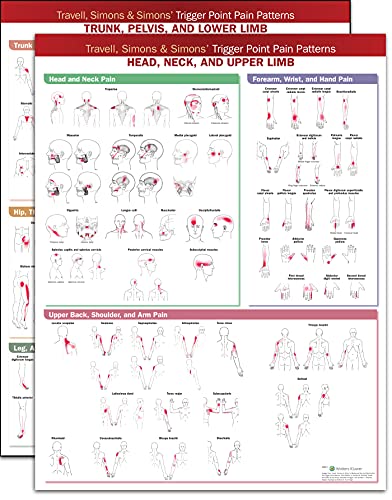
The Travell and Simons Trigger Point Chart helps identify muscle pain spots causing discomfort. It shows common pain patterns linked to trigger points in the body.
This chart is a useful tool for understanding myofascial pain, which comes from tight muscle areas called trigger points. These points cause pain not only where they are but also in other parts of the body. The charts cover different body areas such as the head, neck, arms, trunk, pelvis, and legs.
Health professionals and patients use these visual guides to find pain sources and plan treatment. The flip charts and wall posters from Travell and Simons provide clear, detailed images to make learning easier. Knowing about trigger points helps manage pain better and improves muscle function. This resource supports pain relief and recovery in simple, clear steps.
Travell, Simons & Simons’ Trigger Point Pain Patterns Wall Charts Package

The Travell, Simons & Simons’ Trigger Point Pain Patterns Wall Charts Package is ideal for healthcare professionals, including physical therapists, massage therapists, chiropractors, and pain management specialists. This educational tool is perfect for those seeking a comprehensive visual aid to better understand and explain myofascial pain patterns and trigger points to their patients or students.
Pros:
- Detailed Visual Representation of trigger point pain patterns enhances diagnostic accuracy.
- Compact and Lightweight Design (3.23 x 22.44 x 3.15 inches, 0.74 pounds) makes it easy to display and handle.
- Second Edition ensures updated and reliable information for clinical use.
- High-quality print by ACC, a trusted manufacturer in the medical education field.
- Helps improve patient education and communication through clear, visual explanations.
Cons:
- May not be suitable for casual users or those without medical background due to technical content.
- Limited to wall chart format, which may require additional resources for interactive learning.
The Travell, Simons & Simons’ Trigger Point Pain Patterns Wall Charts Package provides an in-depth look at trigger point anatomy and referred pain patterns, making it an invaluable resource for clinical settings. Its detailed illustrations help practitioners quickly identify the root causes of muscle pain, enabling more effective treatment planning. The charts are designed to be visually engaging, which aids in patient understanding and compliance during therapy sessions.
With its compact size and lightweight design, this package is easy to integrate into any medical office or classroom without occupying excessive space. The second edition reflects the latest research and clinical insights, ensuring users have access to the most current knowledge. Overall, these wall charts serve as a powerful educational tool that enhances both professional practice and patient care.
Trigger Point Pain Patterns Flip Charts

The Travell, Simons & Simons’ Trigger Point Pain Patterns Flip Charts are ideal for healthcare professionals, massage therapists, physical therapists, and students in the medical field who want a comprehensive and easy-to-use reference for identifying and treating trigger points. This item is perfect for those seeking to enhance their understanding of muscle pain patterns and improve patient outcomes through visual learning.
Pros:
- Compact and lightweight design with dimensions of 14.96 inches height, 11.81 inches length, and weighing less than half a pound, making it highly portable.
- Contains 24 detailed pages with clear, illustrated pain patterns to facilitate quick reference and better clinical application.
- Published by ACC and updated in the second edition (2022), ensuring up-to-date and reliable information.
- Durable flip chart format allows for easy handling and repeated use during patient consultations or training sessions.
Cons:
- Limited to 24 pages, which may not cover every possible trigger point in exhaustive detail for advanced practitioners.
- The flip chart format may not be suitable for users who prefer digital or interactive resources for quick searches.
- Some users may find the thickness (0.32 inches) less convenient for storage alongside other flat reference materials.
The Travell, Simons & Simons’ Trigger Point Pain Patterns Flip Charts offer a visually engaging and practical tool for identifying common trigger point pain patterns. Each page is thoughtfully designed with detailed illustrations that highlight muscle areas and corresponding pain referral zones, allowing users to quickly pinpoint the source of discomfort. This feature benefits therapists by streamlining diagnosis and tailoring treatment plans more effectively.
In addition to its user-friendly layout, the flip chart’s portability and durable construction make it ideal for on-the-go consultations and educational settings. The updated content in the 2022 second edition ensures that users have access to the latest research and clinical practices. Overall, this resource enhances learning, improves patient communication, and supports better therapeutic outcomes in managing myofascial pain.
Trigger Point Pain Patterns Wall Chart

The Travell, Simons & Simons’ Trigger Point Pain Patterns Wall Chart: Head, Neck, and Upper Limb is ideal for healthcare professionals, physiotherapists, massage therapists, and students who require a detailed and visual reference to understand trigger point pain patterns in the upper body. This chart is perfect for those looking to enhance their diagnostic accuracy and treatment plans for patients suffering from chronic or acute pain in the head, neck, and upper limb regions.
Pros:
- Comprehensive visual guide to trigger point pain patterns specific to the head, neck, and upper limb
- Compact and lightweight design measuring 20.0 inches in height and only 0.200 pounds, making it easy to display or carry
- Produced by ACG and based on the authoritative second edition, ensuring up-to-date and accurate information
- Single-page format provides a clear and concise overview without overwhelming details
- Published recently in 2021, reflecting current research and clinical insights
Cons:
- Limited to only one page, which may not cover all intricate details for advanced practitioners
- Focused exclusively on the head, neck, and upper limb, so it’s not suitable for those needing information on other body areas
- The narrow width and length (2.0 inches each) might limit visibility from a distance when displayed
This wall chart offers a highly practical and visually engaging tool that simplifies the complex anatomy of trigger points in the upper body. By mapping out pain referral patterns, it assists practitioners in quickly identifying likely sources of musculoskeletal pain, thereby improving treatment outcomes. The clear layout and professional design make it an excellent educational aid for both clinical use and academic environments.
With its compact size and authoritative content, the chart is easy to integrate into any practice or classroom setting. Users benefit from having a reliable, evidence-based reference that supports quicker diagnosis and more effective therapy plans. Overall, it enhances understanding of pain mechanisms, helping to reduce patient discomfort and improve quality of care.
Trigger Point Pain Patterns Wall Chart

The Travell, Simons & Simons’ Trigger Point Pain Patterns Wall Chart: Trunk, Pelvis, and Lower Limb is ideal for healthcare professionals, including physical therapists, massage therapists, chiropractors, and medical students who require a detailed and visual reference for diagnosing and treating myofascial pain. This wall chart is perfect for anyone looking to enhance their understanding of trigger point pain patterns in the lower body to improve patient outcomes.
Pros:
- Comprehensive visual guide covering trunk, pelvis, and lower limb pain patterns
- Compact size with dimensions of 19.5 x 20.25 inches, making it easy to display in clinics or classrooms
- Produced by ACC, a reputable manufacturer in medical education materials
- Clear, high-quality illustration on a single page for quick reference
- Second edition with updated and accurate information published in 2021
Cons:
- Limited to only the trunk, pelvis, and lower limb, so additional charts may be needed for full body coverage
- Single-page format may feel insufficient for users seeking detailed explanations alongside visuals
- Paper material could be prone to wear without lamination or protective cover
The wall chart offers a highly detailed and easy-to-understand presentation of common trigger point pain patterns in the lower body. This feature allows practitioners to quickly identify and correlate patient symptoms with specific muscle trigger points, facilitating faster and more accurate diagnosis. Its durable size and layout make it an excellent educational tool that can be prominently displayed in treatment rooms or educational settings.
Additionally, the chart’s publication by ACC and its recent update in 2021 ensure that users are referencing the most current and reliable information available. The single-page format consolidates essential data, making it accessible and user-friendly for professionals who need quick access during patient consultations or training sessions.
Trigger Points Of Pain Wall Charts
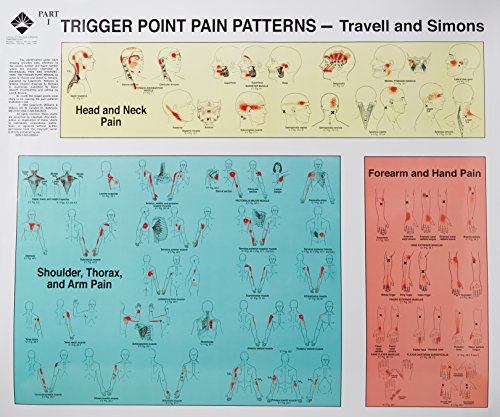
The Trigger Points of Pain: Wall Charts (Set of 2) are ideal for healthcare professionals, physical therapists, massage therapists, and students in the medical field who need a clear, visual reference to understand and identify common trigger points associated with muscular pain. These charts serve as an excellent educational tool for anyone looking to improve their knowledge of muscle pain patterns and treatment techniques.
Pros:
- Highly detailed and accurate visual representation of trigger points and referred pain areas.
- Durable, large format charts measuring 34.5 inches in height for easy readability.
- Compact and lightweight (approximately 2 pounds) making them easy to hang or transport.
- Produced by reputable brand LWW, ensuring quality and reliability.
- Set of two charts provides comprehensive coverage of various muscle groups.
Cons:
- Single-page edition limits the amount of information per chart.
- Publication date is from 1996, which may mean some newer research is not included.
- Charts may require additional resources or explanation for beginners.
These wall charts provide an invaluable tool for quickly identifying trigger points that cause muscular pain. The large size and clear illustrations make it easy for professionals to use them during patient consultations or educational sessions. By visually mapping the pain referral patterns, users can better diagnose and tailor treatment plans, enhancing the overall effectiveness of therapy.
Additionally, the charts’ portability and sturdy design mean they can be displayed in clinics or carried to different locations without damage. While the information is concise, the focus on key trigger points ensures that users have access to the most relevant and practical data needed for day-to-day clinical use. This makes the Trigger Points of Pain: Wall Charts a practical addition to any medical or therapeutic workspace.
Travell And Simons’ Trigger Point Flip Charts

The Travell and Simons’ Trigger Point Flip Charts are ideal for healthcare professionals such as physical therapists, massage therapists, and chiropractors who need a reliable reference for identifying and treating trigger points. This resource is perfect for practitioners seeking an easy-to-use, visual guide to enhance their understanding of muscle pain and referral patterns.
Pros:
- Clear and concise illustrations of trigger points and referred pain patterns
- Compact flip chart format for convenient use during patient consultations
- Durable and laminated pages for long-lasting usability
- Produced by a reputable manufacturer, Wolters Kluwer Health
- Comprehensive content condensed into 24 pages, making it easy to navigate
Cons:
- Limited to the first edition published in 2014, so may lack the latest research updates
- Small number of pages might not cover all possible trigger points in depth
- Primarily designed for professionals, less suitable for casual learners or patients
The flip charts feature detailed, anatomically accurate illustrations that highlight common trigger points and their associated referral pain areas. This visual approach allows practitioners to quickly identify problem spots in muscles, improving diagnostic accuracy and treatment effectiveness. The laminated pages ensure that the charts can withstand frequent handling in clinical environments, making them a practical tool for everyday use.
Produced by Wolters Kluwer Health, a trusted name in medical publishing, this resource benefits from expert content curation and high-quality printing. The concise 24-page format strikes a balance between thoroughness and portability, enabling users to keep it handy during patient sessions without being overwhelmed by excessive detail. Overall, the flip charts offer an efficient and accessible way to enhance musculoskeletal care and patient outcomes.
Myofascial Pain And Dysfunction: The Trigger Point Manual

The LWW – Travell, Simons & Simons’ Myofascial Pain and Dysfunction: The Trigger Point Manual is ideal for healthcare professionals such as physical therapists, pain specialists, and massage therapists, as well as students in these fields. Anyone seeking a comprehensive and authoritative resource on diagnosing and treating myofascial pain through trigger point therapy will find this manual invaluable.
Pros:
- Extensive coverage with 968 pages of detailed content.
- Published by the reputable LWW brand and manufacturer.
- Includes the 3rd edition, ensuring up-to-date information as of 2018.
- Well-organized and easy to navigate with clear illustrations and clinical insights.
- Comprehensive explanations of trigger point diagnosis and treatment techniques.
Cons:
- Relatively heavy and bulky with a weight of over 2.3 pounds, which may be less portable.
- Detailed and technical content might be overwhelming for beginners without prior background.
- Price point could be higher than more general pain management books.
This manual stands out due to its thorough approach to myofascial pain and dysfunction, providing both theory and practical application. The dimensions (Height: 11.0 inches, Width: 1.5 inches, Length: 8.75 inches) reflect a substantial and durable volume that professionals can rely on as a reference tool. The inclusion of extensive clinical case studies and detailed trigger point maps aids practitioners in accurately identifying and treating pain sources.
By using this manual, users benefit from a structured treatment methodology that enhances patient outcomes through effective trigger point therapy. The comprehensive nature of the book supports both learning and clinical practice, making it a key resource for advancing expertise in pain management and rehabilitation. Overall, this edition maintains the legacy of Travell and Simons’ work, combining scientific rigor with practical utility.
Myofascial Pain And Dysfunction: The Trigger Point Manual, Vol. 1

The Myofascial Pain and Dysfunction: The Trigger Point Manual, Vol. 1 – Upper Half of Body is ideal for healthcare professionals, physical therapists, massage therapists, and students specializing in pain management and musculoskeletal disorders. This comprehensive manual is perfect for those seeking an in-depth understanding of trigger points and myofascial pain specifically in the upper half of the body. Anyone involved in diagnosing or treating chronic pain conditions will find this resource invaluable.
Pros:
- Extensive coverage with 1056 pages providing detailed information on trigger points.
- Published by a reputable brand, Lippincott Williams Wilkins, ensuring high-quality content.
- Comes in a sturdy physical format with dimensions of 10.5 x 7.75 x 2.0 inches and weighs about 4.4 pounds, making it a durable reference.
- The 2nd edition includes updated research and clinical insights.
- Focuses specifically on the upper half of the body, making it highly specialized for targeted treatment.
Cons:
- Relatively heavy and bulky to carry around due to its physical size and weight.
- Published in 1999, some information may not include the latest research advancements.
- Highly technical content may be challenging for beginners without prior knowledge of anatomy and pain mechanisms.
This manual offers a detailed exploration of the pathophysiology of myofascial pain and the identification and treatment of trigger points. Its comprehensive approach helps practitioners understand the complex interplay between muscles, nerves, and pain patterns. The book’s detailed illustrations and clinical guidance enable precise diagnosis and effective treatment plans, which can significantly enhance patient outcomes.
Additionally, the focused content on the upper half of the body allows users to specialize their knowledge for conditions involving the neck, shoulders, arms, and upper back. This specialization is beneficial for therapists who frequently treat these areas, as it provides targeted strategies and techniques. Overall, this manual is an essential resource for anyone serious about mastering the management of myofascial pain and dysfunction.
Travell And Simons’ Trigger Point Flip Charts
![Travell and Simons' Trigger Point Flip Charts[TRAVELL & SIMONS TRIGGER POINT][Other]](https://m.media-amazon.com/images/I/01RmK+J4pJL._SL500_.gif)
The Travell and Simons’ Trigger Point Flip Charts are ideal for healthcare professionals such as physical therapists, massage therapists, chiropractors, and medical students who want a detailed and practical guide to understanding and treating myofascial pain and trigger points. If you are looking for a comprehensive visual tool to enhance your clinical skills or educational presentations, this flip chart is an excellent resource.
Pros:
- Clear and detailed illustrations of trigger points and referred pain patterns.
- Durable flip chart format for easy reference during patient consultations or study.
- Produced by LWW, a trusted manufacturer in medical educational materials.
- Helps improve diagnosis and treatment planning for myofascial pain syndromes.
Cons:
- Publication date from 1996 means some information may be outdated compared to recent research.
- Limited to visual and descriptive content without interactive or digital features.
The flip charts provide a systematic presentation of trigger points, offering users a clear visualization of muscle pain patterns and the anatomical locations of trigger points. This facilitates a better understanding of complex myofascial pain issues and enhances the accuracy of therapeutic interventions. The portable format makes it convenient for professionals to carry and use in clinical settings or classrooms.
Additionally, the charts support faster learning and improved patient communication by illustrating pain referral patterns, which can be challenging to explain verbally. While the publication date indicates that some newer findings might be missing, the core concepts and illustrations remain valuable for foundational knowledge and practical application in manual therapy and rehabilitation contexts.
Myofascial Pain And Dysfunction, Vol. 1: The Trigger Point Manual

The Myofascial Pain and Dysfunction, Vol. 1: The Trigger Point Manual, The Upper Extremities is ideal for healthcare professionals such as physical therapists, chiropractors, massage therapists, and pain management specialists who seek a comprehensive and authoritative resource on diagnosing and treating myofascial pain. Students and practitioners aiming to deepen their understanding of trigger points and their impact on the upper extremities will find this manual invaluable for clinical practice and academic study.
Pros:
- Comprehensive coverage of trigger points in the upper extremities with detailed illustrations and explanations.
- Published by a reputable brand, Lippincott Williams and Wilkins, ensuring high-quality and reliable content.
- Extensive 713 pages offering in-depth knowledge and practical treatment techniques.
- First Edition classic reference, widely recognized and used in the field since 1983.
- Physical dimensions and weight make it a durable and substantial resource for clinical use.
Cons:
- Relatively heavy and bulky with dimensions of 26.04 x 17.78 x 17.78 inches and weight over 3 pounds, which may reduce portability.
- Being published in 1983, some content may be outdated compared to newer research.
- First Edition format may lack some modern design features and updated treatment protocols.
This manual stands out due to its meticulous focus on the upper extremities and detailed mapping of trigger points that cause myofascial pain. Each section provides clear, practical insights into identification and therapeutic approaches, making it easier for practitioners to apply knowledge directly in clinical settings. The extensive illustrations and anatomical references enhance comprehension and accuracy in treatment.
By understanding the manual’s content, users benefit from improved patient outcomes through targeted interventions. The depth of information supports both diagnosis and rehabilitation, helping clinicians to reduce pain and restore function effectively. While it is a substantial text, the value it brings to professionals working with muscular pain syndromes is significant, making it a cornerstone resource in myofascial therapy.
Frequently Asked Questions
What Are Travell And Simons Trigger Point Charts?
Travell and Simons Trigger Point Charts visually map muscle pain patterns. They help identify trigger points causing referred pain. These charts assist therapists in diagnosing and treating myofascial pain effectively. They cover different body regions such as head, neck, trunk, and limbs for comprehensive pain management.
How Do Trigger Point Flip Charts Differ From Wall Charts?
Flip Charts provide a portable, interactive format for trigger point reference. Wall Charts are large, detailed visuals meant for clinic or office display. Flip Charts allow easy page flipping for quick access during therapy sessions. Wall Charts offer a broader overview for education and patient explanation.
Which Body Areas Do The Trigger Point Wall Charts Cover?
The Trigger Point Wall Charts cover the upper limbs, head, neck, trunk, pelvis, and lower limbs. Each chart highlights specific pain referral patterns for those regions. This specialization aids targeted diagnosis and therapy. The comprehensive coverage supports understanding of complex myofascial pain.
What Is Included In The Trigger Point Charts Package?
The package includes multiple wall charts and flip charts illustrating pain patterns. It often contains charts for both upper and lower body regions. Some packages bundle the original Trigger Point Manual for in-depth reference. This comprehensive set is ideal for therapists and educators.
How Can These Charts Help In Managing Myofascial Pain?
These charts guide clinicians to locate and treat trigger points accurately. They improve pain diagnosis by showing common referral areas. Using the charts enhances treatment precision, reducing patient discomfort. They also educate patients about their pain origins and therapy plans.
Conclusion
The Travell and Simons Trigger Point Chart offers clear, easy-to-understand visuals for identifying pain areas. These charts help you see where trigger points cause discomfort in different body parts. Whether using the wall charts or flip charts, you get detailed maps of muscle pain patterns.
The charts cover the head, neck, upper limbs, trunk, pelvis, and lower limbs. They are useful tools for students, therapists, and anyone learning about muscle pain. The manuals and charts work well together to explain trigger points and how they affect the body.
With simple images and clear labeling, they make complex information easier to grasp. Using these resources can improve your knowledge of myofascial pain and how to find its source. This helps in managing pain more effectively and understanding body mechanics better.
Overall, the Travell and Simons charts remain trusted guides for learning about trigger point pain.
